بئیین موهندیسلیگینه قارشی تورکجه اسکی کیتابلار 517
تورکجه
Türkcə
English
۵۱۷
-جی بؤلوم
میر عبدالفتاح مراغهاینین «دیوان» الیازماسی: بیر کودیکولوژی و پالئوقرافیا آراشدیرماسی
«بئین مهندیسلیگینه قارشی تورکجه اسکی کیتابلار» سیلسلهسیندن
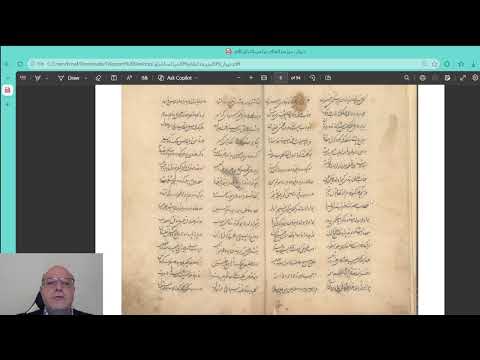
بوگونکۆ درسیمیزده ایران مجلس شورای اسلامی کتابخاناسیندا ساخنان، ۱۷۳۶۴ شمارهسی ایله تانینان و میر عبدالفتاح مراغهاییه نسبت وئریلن «دیوان» الیازماسینی آراشدیرماغا چالیشدیق. کیتابخانانین تانیتیم بیلگیلرینده اثرین آدی «دیوان»، شاعیرین آدی ایسه میر عبدالفتاح مراغهای اولاراق گؤستریلیبدیر. شاعیرین «اشراق» تخلصوندن ده ایستیفاده ائتدیگینی متنده گؤردوک.
بو درسده مقصدیمیز یالنیز شعرلری اوخوماق دئییلدی. بیز الیازمانین فیزیکی قۇرولوشونو، یازی نوعونو، کاتيبین ایش اؤزللیکلرینی، متندهکی دوزن و دوزنسېزلیکلری، کیتابین استعمال ایزلرینی و ممکن تاریخینی آراشدیرماغا چالیشدیق.
۱. الیازمانین فیزیکی اؤزللیکلری
آراشدیردیغیمیز نۆسخهنین دیجیتال صورتلری ۹۴ گؤرونتودن عبارتدیر. بو گؤرونتولرین بیر چوخوندا کیتابین ایکی قارشیلیقلی صفحهسی بیرلیکده گؤرونور.
اؤلچو خطکشینه اساسلاناراق، ورقلرین بؤیوکلوگونو تخمیناً ۲۱ سانتیمتر اوزونلوق و ۱۲٫۵ سانتیمتر ائن اولاراق قئید ائتدیک. لاکین بو اؤلچولرین دیجیتال تصویر اوزريندن آلیندیغینی و دقیق فیزیکی اؤلچو ساییلمادیغینی ده نظره آلمالیییق.
متن صفحهلری ایله کیتابین باشلانغیج و سونونداکی بوش ورقلر آراسیندا کاغیذین رنگی و قالینلیغی باخیمیندان فرق گؤرونور. بو فرق سونرادان جلدلنه یا تعمیر اولونما احتمالینی دوشوندورور. آنجاق تکجه بو مشاهدهیه اساسلاناراق کیتابین حتماً یئنیدن جلدلندیگینی دئمک اولماز.
۲. یازی نوعو: نستعلیق احتمالینی نئجه دگرلندیریریک؟
بو درسین ان اؤنملی بؤلوملریندن بیری خطین تانینماسی ایدی.
حرفلرین بیر-بیرینه نسبتله یئرلشمهسی، کلمهلرین ساتیر اوزرينده یوخاری و آشاغی حرکت ائتمهسی، اوزون و قیسـا قەلەم چکیشلری و بعضی حرفلرین بیر-بیرینین اوستونه گلمهسی، خطین نستعلیق اولما احتمالینی گوجلندیریر.
بیز خصوصاً «دال» و «واو» حرفلرینین شکلینه دقت ائتدیک. بعضی کلمهلرده «دال» حرفینین آغزی گئنیش، بعضیلرینده ایسه داها یığcam گؤرونور. بو فرق کاتيبین قەلەم حرکتینه، حرفین کلمهدهکی موقعیتینه یا یازی سورعتینه باغلی اولا بیلر.
بیزیم مشاهدهمیزه گؤره، کاتيب ساتیری دوز بیر افقی خط کیمی ایزلهمیر. کلمهلر بعضاً بیر-بیرینه یاخینلاشیر، بیر کلمهنین بیر حیصهسی باشقا کلمهنین اوستونه دوشور. بو خصوصیت نستعلیق خطینین تانینمیش اؤزللیکلرینه اویغوندور.
نتیجه اولاراق، الیازمانین خطینی نستعلیق کیمی تانیتماق اوچون گوجلو اساسیمیز وار. لاکین کاتيبین شخصی خط اؤزللیکلرینی معین ائتمک اوچون حرفلرین شکللرینی داها سیستملی مقایسه ائتمهلیییک.
۳. صفحه دوزنی و کاتيبین ایش اوسولو
الیازمانین بیر چوخ صفحهسینده شعرلر ایکی ستوندا یازیلیبدیر. باشلیقلارین بعضیلری قیرمیزی مرکبله، اصلی متن ایسه قارا مرکبله یازیلیبدیر.
بعضی صفحهلرده متن ساتیرلرینین یئرینی معین ائدن، رنگسیز یا چوخ ضعیف ایزلر گؤرونور. بیز بونلارین قەلەمسیز خطکشی، یعنی کاغیذ اوزرينده باسقی ایله یارادیلمیش ساتیر بەلیرلهمه ایزلری اولا بیلهجگینی دوشوندۈک.
آنجاق بو احتمالین تصدیقی اوچون کاغیذین ایشیق آلتيندا و مختلف زاویهلردن اینجەلَنمهسی لازیمدیر.
بعضی شعرلرین سونوندا مصرعلرین یئرلشمهسی ده دگیشیر. بو دگیشیکلری یازیچینین سهوی کیمی دگرلندیرمک دوزگون اولماز؛ چونکی شعرین قۇرولوشو و صفحهنین بوش یئری ده بو انتخابا تأثیر ائده بیلر.
۴. متن، شاعیر و «اشراق» تخلصو
الیازمانین محتوایندا کربلا واقعهسی، امام حسین، حضرت علیاصغر، اهلبیتین مصیبتلری و عاشورا یادداشتلری گئنیش یئر توتور.
شعرلرین بیر قیسمی فارسی، بیر قیسمی ایسه تورکجهدیر. بو خصوصیت اثرین ادبی و دیل تاریخی باخیمیندان آراشدیریلماسینی داها دا اؤنملی ائدیر.
متنده «اشراق» تخلصونه راست گلدیک. بیر باشلیقدا شاعیرین باشقا منظومهلرینده بو تخلصدن ایستیفاده ائتدیگینه اشاره اولونور.
بعضی باشلیقلاردا شاعیر اوچون «مرحوم»، «طاب ثراه» و «قدس الله سره العزيز» کیمی دعالی تعبیرلر ایشلدیلیبدیر. بونلار متنده شاعیره وفاتیندان سونرا باخیلدیغینی گؤستره بیلر.
لا کین بورادا اؤنملی بیر احتیاط وار: بو تعبیرلرین وارلیغی الیازمانین کؤچورولمه تاریخینی تکباشینا ثابت ائتمیر. کاتيب بو باشلیقلاری داها قدیم بیر نۆسخهدن ده کؤچورموش اولا بیلر.
متنده «ریاض الفتوح» آدینا دا راست گلدیک. بو آدین شاعیرین باشقا بیر اثرینهمی، یوخسا باشقا بیر منبعهمی اشاره ائتدیگینی هله معین ائتمهمیشیک.
۵. کیتابین زدلنمهسی و استعمال تاریخی
صفحهلرده سو لکهلری، مرکبین یاییلماسی، بعضی یئرلرده قارا ایزلر و کاغیذین رنگ دگیشمهسی گؤرونور.
خصوصاً بعضی آردیجیل ورقلرده لکهلرین بیر-بیرینه یاخین موقعیتده گؤرونمهسی، کیتابین بیر زامانلار رطوبته معروض قالدیغینی دوشوندورور.
درس اسناسیندا بو زدلنمهلرین ممکن سببلری اوزرينده ده دوشوندۈک: سو توکولمهسی، نەم ال ایله توخولما، یا کیتابین نامناسب شرایطده ساخланماسی.
آنجاق بیزیم تەنقیدی نتیجهمیز بودور کی، لکهنین وارلیغی مشاهدهدیر؛ لکهنین نئجه یاراندیغی ایسه هله فرضیهدیر.
بو ایکیسینی بیر-بیرینه قاریشدیرمامالیییق.
۶. الیازمانین باشلانغیجی و سونو: ناقیصلیک احتمالینی آراشدیریریق
کیتابین اصلی متنینه کئچنده شعرین بیر روایتین اورتاسیندان باشلاندیغی تصورونو آلدیق. متن اوچون آیری بیر مقدمه یا آچیق باشلانغیج گؤرمَدیک.
بو، الیازمانین باشیندان بعضی ورقلرین ایتدیگی احتمالینی یارادیر. لاکین دیوانلرین ترتیب خصوصیتلرینی نظره آلمادان بو احتمالینی قطعی نتیجه کیمی قبول ائده بیلمریک.
داها اؤنملی مشاهده کیتابین سونوندا قارشیمیزا چیخدی. سون یازیلی صفحهده بیر رداده، یعنی سونراکی صفحهنین باشلانغیج کلمهسینی گؤسترمک اوچون یازیلمیش کلمه، وار. لاکین آردینجا گؤرونن ورقلر بوشدور.
بو حالت متننىڭ سون حیصهسینده ورق ایتکیسی اولدوغو احتمالینی گوجلندیریر.
بونونلا بئله، ایتن ورقلرین سایینی، ایتکینین نئجه باش وئردیگینی یا نۆسخهنین نه قدر ناقیص قالدیغینی ایندیدن معین ائده بیلمریک.
۷. تاریخیلندیرمه مسئلهسی
بو درسده خطین اؤزللیکلرینی اینجەلَدیک، لاکین کاتيبین آدینی و الیازمانین کؤچورولمه تاریخینی قطعی شکلده معین ائدهجک بیر ثبت گؤستره بیلمَدیک.
نستعلیق خطینین ایشلدیلمهسی، کاغیذین گؤرونوشو و صفحه دوزنی تاریخیلندیرمه اوچون فایدالی مقایسه معیارلریدیر. آنجاق بونلار تکباشینا دقیق بیر تاریخ وئرمیر.
بیز بو مرحلهده شاعیرین یاشادیغی دؤورله الیازمانین کؤچورولدوغو دؤورو ده بیر-بیریندن آییرمالیییق. اثرین یازیلماغی ایله بیزیم الیمیزدهکی نۆسخهنین کؤچورولمهسی آراسیندا اوزون بیر زمان فاصلهسی اولا بیلر.
۸. بوگونکۆ درسیمیزه تەنقیدی باخیش
بوگونکۆ ایشیمیزده بیر نئچه مثبت نقطه وار ایدی.
بیز خطین نوعونو تعیین ائتمک اوچون یالنیز عمومی گؤرونوشه باخمادیق؛ حرفلرین شکلینی، قەلەم حرکتینی، کلمهلرین ساتیرداکی موقعیتینی و یازی دوزنینی ده مقایسه ائتدیک.
متندهکی باشلیقلاری اصلی شعردن آییرماغا چالیشدیق. الیازمانین ناقیص اولما احتمالینی ایسه سون صفحهدهکی ردادهیه باغلادیق. بونلار کودیکولوژی و پالئوقرافیا باخیمیندان فایدالی مشاهدهلردیر.
آنجاق آراشدیرمامیزین زعیف طرفلری ده وار.
بعضی یئرلرده کاغیذین لکهلرینه باخاراق، اونلارین نئجه یاراندیغی بارهده تئز نتیجه چیخارماغا مئیل ائتدیک. بعضی حرفلرین شکل فرقینی ایسه کافی تعداددا نمونه مقایسه ائتمهدن کاتيبین شخصی اوسلوبي کیمی دگرلندیرمک ایستهدیک.
همچنین، الیازمانین ناقیص اولماسی بارهده گوجلو احتماللاریمیز اولسا دا، ورق ترتیبینی و دفتر قۇرولوشونو کامل آراشدیرمادیغیمیز اوچون قطعی حکم وئره بیلمریک.
بوگونکۆ درسیمیزین ان اؤنملی علمی نتیجهسی بودور: مشاهده، احتمال و نتیجه بیر-بیریندن آیری ساخلامالیییق.
نتیجه
۵۱۷-جی بؤلومده میر عبدالفتاح مراغهاییه نسبت وئریلن «دیوان» الیازماسینی کودیکولوژی، پالئوقرافیا و متن تاریخی باخیمیندان اینجەلَدیک.
خطین نستعلیق اولماسی احتمالینی گوجلو گؤردوک. صفحه دوزنینی، قیرمیزی باشلیقلاری، ردادهلری، کاغیذین زدلنمهسینی و متندهکی فارسی و تورکجه شعرلری قئید ائتدیک.
همچنین، اثرین باشلانغیج و سون حیصهلرینده ممکن ناقیصلیک مسئلهسینی اورتایا قویدوق.
بو آراشدیرما هله سون نتیجه دئییل. کیتابین باشقا نۆسخهلری ایله مقایسهسی، شاعیرین تاریخی شخصیتینین آراشدیریلماسی و خطین داها دقیق اینجەلَنمهسی گلهجک ایشلریمیزین اساسینی تشکیل ائدیر.
بیز بو درسده بیر داها اؤیرندیک کی، الیازما آراشدیرماسیندا علمی دقت یالنیز چوخ چیز گؤرمک دئییل؛ گؤردوکلریمیزین هانسیسینی ثابت ائده بیلدیگیمیزی، هانسیسینی ایسه هله احتمال کیمی ساخلامالی اولدوغوموزو بیلمکدیر.
«بئین مهندیسلیگینه قارشی تورکجه اسکی کیتابلار» — ۵۱۷-جی بؤلوم
517-ci bölüm
Mir Əbdülfəttah Marağinin “Divan” əlyazması: Kodikoloji və paleoqrafik araşdırma
“Beyin mühəndisliyinə qarşı türkcə əski kitablar” silsiləsindən
Bugünkü dərsimizdə İran İslam Şurası Məclisinin Kitabxanasında saxlanılan, 17364 nömrəsi ilə tanınan və Mir Əbdülfəttah Marağiyə aid edilən “Divan” əlyazmasını araşdırmağa çalışdıq. Kitabxananın kataloq məlumatlarında əsərin adı “Divan”, şairin adı isə Mir Əbdülfəttah Maraği olaraq göstərilmişdir. Şairin “İşraq” təxəllüsündən də istifadə etdiyini mətndə gördük.
Bu dərsdə məqsədimiz yalnız şeirləri oxumaq deyildi. Biz əlyazmanın fiziki quruluşunu, yazı növünü, katibin iş xüsusiyyətlərini, mətndəki düzən və düzənsizlikləri, kitabın istifadə izlərini və mümkün tarixini araşdırmağa çalışdıq.
1. Əlyazmanın fiziki xüsusiyyətləri
Araşdırdığımız nüsxənin rəqəmsal surətləri 94 görüntüdən ibarətdir. Bu görüntülərin bir çoxunda kitabın iki qarşılıqlı səhifəsi birlikdə görünür.
Ölçü xətkeşinə əsaslanaraq vərəqlərin böyüklüyünü təxminən 21 santimetr uzunluq və 12,5 santimetr en olaraq qeyd etdik. Lakin bu ölçülərin rəqəmsal təsvir üzərindən alındığını və dəqiq fiziki ölçü sayılmadığını da nəzərə almalıyıq.
Mətn səhifələri ilə kitabın başlanğıc və sonundakı boş vərəqlər arasında kağızın rəngi və qalınlığı baxımından fərq görünür. Bu fərq sonradan cildlənmə və ya təmir olunma ehtimalını düşündürür. Ancaq təkcə bu müşahidəyə əsaslanaraq kitabın mütləq yenidən cildləndiyini demək olmaz.
2. Yazı növü: Nəstəliq ehtimalını necə dəyərləndiririk?
Bu dərsin ən önəmli bölümlərindən biri xəttin tanınması idi.
Hərflərin bir-birinə nisbətlə yerləşməsi, kəlmələrin sətir üzərində yuxarı və aşağı hərəkət etməsi, uzun və qısa qələm çəkilişləri və bəzi hərflərin bir-birinin üstünə gəlməsi xəttin nəstəliq olma ehtimalını gücləndirir.
Biz xüsusilə “dal” və “vav” hərflərinin şəklinə diqqət etdik. Bəzi kəlmələrdə “dal” hərfinin ağzı geniş, bəzilərində isə daha yığcam görünür. Bu fərq katibin qələm hərəkətinə, hərfin kəlmədəki mövqeyinə və ya yazı sürətinə bağlı ola bilər.
Bizim müşahidəmizə görə, katib sətri hər yerdə düz bir üfüqi xətt kimi izləmir. Kəlmələr bəzən bir-birinə yaxınlaşır, bir kəlmənin bir hissəsi başqa kəlmənin üstünə düşür. Bu xüsusiyyət nəstəliq xəttinin tanınmış xüsusiyyətlərinə uyğundur.
Nəticə olaraq, əlyazmanın xəttini nəstəliq kimi tanıtmaq üçün güclü əsaslarımız var. Lakin katibin şəxsi xətt xüsusiyyətlərini müəyyən etmək üçün hərflərin şəkillərini daha sistemli müqayisə etməliyik.
3. Səhifə düzəni və katibin iş üsulu
Əlyazmanın bir çox səhifəsində şeirlər iki sütunda yazılmışdır. Başlıqların bəziləri qırmızı mürəkkəblə, əsas mətn isə qara mürəkkəblə yazılmışdır.
Bəzi səhifələrdə mətn sətirlərinin yerini müəyyən edən rəngsiz və ya çox zəif izlər görünür. Biz bunların qələmsiz xətkeşləmə, yəni kağız üzərində basqı ilə yaradılmış sətir müəyyənləşdirmə izləri ola biləcəyini düşündük.
Ancaq bu ehtimalın təsdiqi üçün kağızın işıq altında və müxtəlif bucaqlardan incələnməsi lazımdır.
Bəzi şeirlərin sonunda misraların yerləşməsi də dəyişir. Bu dəyişiklikləri katibin səhvi kimi dəyərləndirmək düzgün olmaz. Çünki şeirin quruluşu və səhifənin boş yeri də bu seçimə təsir edə bilər.
4. Mətn, şair və “İşraq” təxəllüsü
Əlyazmanın məzmununda Kərbəla hadisəsi, İmam Hüseyn, Həzrət Əliəsğər, Əhli-beytin müsibətləri və Aşura ilə bağlı mövzular geniş yer tutur.
Şeirlərin bir qismi farsca, bir qismi isə türkcədir. Bu xüsusiyyət əsərin ədəbi və dil tarixi baxımından araşdırılmasını daha da önəmli edir.
Mətndə “İşraq” təxəllüsünə rast gəldik. Bir başlıqda şairin başqa mənzumələrində bu təxəllüsdən istifadə etdiyinə işarə olunur.
Bəzi başlıqlarda şair üçün “mərhum”, “tabə sərah” və “qəddəsəllahu sirrəhu-l-əziz” kimi dualı ifadələr işlədilmişdir. Bunlar mətndə şairə vəfatından sonra baxıldığını göstərə bilər.
Lakin burada önəmli bir ehtiyat var: Bu ifadələrin varlığı əlyazmanın köçürülmə tarixini təkbaşına sübut etmir. Katib bu başlıqları daha qədim bir nüsxədən də köçürmüş ola bilər.
Mətndə “Riyazül-Fütuh” adına da rast gəldik. Bu adın şairin başqa bir əsərinəmi, yoxsa başqa bir mənbəyəmi işarə etdiyini hələ müəyyən etməmişik.
5. Kitabın zədələnməsi və istifadə tarixi
Səhifələrdə su ləkələri, mürəkkəbin yayılması, bəzi yerlərdə qara izlər və kağızın rəng dəyişməsi görünür.
Xüsusilə bəzi ardıcıl vərəqlərdə ləkələrin bir-birinə yaxın mövqedə görünməsi kitabın bir zamanlar rütubətə məruz qaldığını düşündürür.
Dərs əsnasında bu zədələnmələrin mümkün səbəbləri üzərində də düşündük: su tökülməsi, nəm əl ilə toxunulma və ya kitabın münasib olmayan şəraitdə saxlanılması.
Ancaq bizim tənqidi nəticəmiz budur ki, ləkənin varlığı müşahidədir; ləkənin necə yarandığı isə hələ fərziyyədir.
Bu ikisini bir-birinə qarışdırmamalıyıq.
6. Əlyazmanın başlanğıcı və sonu: Natamamlıq ehtimalını araşdırırıq
Kitabın əsas mətninə keçəndə şeirin bir rəvayətin ortasından başladığı təsəvvürünü aldıq. Mətn üçün ayrıca bir müqəddimə və ya açıq başlanğıc görmədik.
Bu, əlyazmanın başından bəzi vərəqlərin itdiyi ehtimalını yaradır. Lakin divanların tərtib xüsusiyyətlərini nəzərə almadan bu ehtimalı qəti nəticə kimi qəbul edə bilmərik.
Daha önəmli müşahidə kitabın sonunda qarşımıza çıxdı. Son yazılı səhifədə bir rədadə (catchword), yəni sonrakı səhifənin başlanğıc kəlməsini göstərmək üçün yazılmış kəlmə var. Lakin ardınca görünən vərəqlər boşdur.
Bu vəziyyət mətnin son hissəsində vərəq itkisi olduğu ehtimalını gücləndirir.
Bununla belə, itən vərəqlərin sayını, itkinin necə baş verdiyini və ya nüsxənin nə qədər natamam qaldığını indidən müəyyən edə bilmirik.
7. Tarixləndirmə məsələsi
Bu dərsdə xəttin xüsusiyyətlərini incələdik, lakin katibin adını və əlyazmanın köçürülmə tarixini qəti şəkildə müəyyən edəcək bir qeyd göstərə bilmədik.
Nəstəliq xəttinin işlədilməsi, kağızın görünüşü və səhifə düzəni tarixləndirmə üçün faydalı müqayisə meyarlarıdır. Ancaq bunlar təkbaşına dəqiq bir tarix vermir.
Biz bu mərhələdə şairin yaşadığı dövrlə əlyazmanın köçürüldüyü dövrü də bir-birindən ayırmalıyıq. Əsərin yazılması ilə bizim əlimizdəki nüsxənin köçürülməsi arasında uzun bir zaman məsafəsi ola bilər.
8. Bugünkü dərsimizə tənqidi baxış
Bugünkü işimizdə bir neçə müsbət məqam var idi.
Biz xəttin növünü təyin etmək üçün yalnız ümumi görünüşə baxmadıq; hərflərin şəklini, qələm hərəkətini, kəlmələrin sətirdəki mövqeyini və yazı düzənini də müqayisə etdik.
Mətndəki başlıqları əsas şeirdən ayırmağa çalışdıq. Əlyazmanın natamam olma ehtimalını isə son səhifədəki rədadəyə bağladıq. Bunlar kodikologiya və paleoqrafiya baxımından faydalı müşahidələrdir.
Ancaq araşdırmamızın zəif tərəfləri də var.
Bəzi yerlərdə kağızın ləkələrinə baxaraq onların necə yarandığı barədə tez nəticə çıxarmağa meyl etdik. Bəzi hərflərin şəkil fərqini isə kifayət qədər nümunə müqayisə etmədən katibin şəxsi üslubu kimi dəyərləndirmək istədik.
Həmçinin, əlyazmanın natamam olması barədə güclü ehtimallarımız olsa da, vərəq ardıcıllığını və dəftər quruluşunu tam araşdırmadığımız üçün qəti hökm verə bilmirik.
Bugünkü dərsimizin ən önəmli elmi nəticəsi budur: Müşahidə, ehtimal və nəticəni bir-birindən ayrı saxlamalıyıq.
Bu baxımdan araşdırmamızda öyrəndiyimiz dörd mərhələli üsulu tətbiq etməyə çalışdıq:
Müşahidə: Əlyazmada birbaşa nə gördüyümüzü müəyyən etdik.
Ehtimal: Müşahidələri izah edə biləcək fərziyyələr irəli sürdük.
Dəlillə yoxlama: Fərziyyələri başqa səhifələr, hərf formaları və kodikoloji əlamətlərlə müqayisə etdik.
Nəticə: Yalnız dəlillərin imkan verdiyi qədər hökm çıxarmağa çalışdıq.
Nəticə
517-ci bölümdə Mir Əbdülfəttah Marağiyə aid edilən “Divan” əlyazmasını kodikologiya, paleoqrafiya və mətn tarixi baxımından incələdik.
Xəttin nəstəliq olması ehtimalını güclü gördük. Səhifə düzənini, qırmızı başlıqları, rədadələri, kağızın zədələnməsini və mətndəki farsca və türkcə şeirləri qeyd etdik.
Həmçinin, əsərin başlanğıc və son hissələrində mümkün natamamlıq məsələsini ortaya qoyduq.
Bu araşdırma hələ son nəticə deyil. Kitabın başqa nüsxələri ilə müqayisəsi, şairin tarixi şəxsiyyətinin araşdırılması və xəttin daha dəqiq incələnməsi gələcək işlərimizin əsasını təşkil edir.
Biz bu dərsdə bir daha öyrəndik ki, əlyazma araşdırmasında elmi dəqiqlik yalnız çox şey görmək deyil; gördüklərimizin hansını sübut edə bildiyimizi, hansını isə hələ ehtimal kimi saxlamalı olduğumuzu bilməkdir.
“Beyin mühəndisliyinə qarşı türkcə əski kitablar” — 517-ci bölüm
Episode 517
A Codicological and Palaeographic Study of the Divan of Mir Abdulfattah Maraghi
From the Research Series: Old Turkic Manuscripts Against the Engineering of the Mind
Introduction
In today's research session, we examined a manuscript attributed to Mir Abdulfattah Maraghi, preserved in the Library of the Islamic Consultative Assembly (Majles Library) in Iran under catalogue number 17364.
The manuscript is identified as a Divan, a collection of poetry. The poet is also associated with the pen name Ishraq.
Our objective was not simply to read the poems. We sought to investigate the manuscript as a historical object by examining its physical structure, handwriting, scribal practices, textual organization, evidence of damage, and possible history of production and use.
Throughout the session, we attempted to distinguish direct observations from hypotheses and conclusions. This distinction is essential to codicological and palaeographical research.
1. Physical Characteristics of the Manuscript
The digital reproduction we examined contains 94 images, many showing two facing pages.
Based on the measuring scale visible in the reproduction, we estimated the dimensions of the leaves to be approximately 21 × 12.5 centimetres. However, these measurements remain provisional because they were obtained from digital images rather than through direct examination of the physical manuscript.
We also observed apparent differences in the colour and texture of the paper between the main text and some blank leaves at the beginning and end of the volume.
These differences raise the possibility of later binding, restoration, or the addition of leaves.
Nevertheless, differences in paper appearance alone cannot establish that the manuscript was rebound. Such a conclusion would require further examination of the gatherings, sewing structure, paper characteristics, and binding.
2. Identifying the Script: The Possibility of Nastaʿlīq
One of the principal objectives of our investigation was to identify the manuscript's script.
We initially considered whether certain features might suggest Divani handwriting. Some words appear to rise above or descend below the normal writing line, while individual letters occasionally overlap.
However, a closer examination of the letterforms and the general organization of the text increasingly suggested Nastaʿlīq script.
Several characteristics supported this interpretation:
The distinctive relationship between horizontal and descending strokes.
The arrangement of words along slightly inclined internal baselines.
The curved and elongated forms of certain letters.
The occasional overlapping of adjacent letters and words.
The relatively consistent execution of recurring letterforms.
We paid particular attention to the shapes of individual letters, including alif, sin, shin, kaf, mim, lam, nun, ra, zay, dal, and waw.
For example, we observed that the letter alif generally maintained a recognizable height and inclination across different words.
The forms of sin and shin were particularly interesting. In some words, their characteristic teeth were reduced or almost entirely flattened, producing elongated horizontal strokes.
Similarly, the letter mim appeared in several positional forms, sometimes as a compact loop and sometimes with an extended descending tail.
We also examined the relationship between dal and waw. In certain words, these letters appeared so close together that their outlines seemed to overlap.
This observation raised questions about the scribe's pen movements.
However, visual contact between two letters does not necessarily establish that they were executed in a single continuous stroke.
Determining the precise sequence of pen movements, known as ductus, requires more detailed evidence.
Our provisional conclusion is that the manuscript was probably written in Nastaʿlīq or a closely related style. A more definitive identification would require systematic comparison with securely dated examples and direct inspection of the relevant images.
3. Page Layout and Scribal Practices
Much of the poetry is arranged in two columns, a familiar format in Persianate manuscript traditions.
The main text is generally written in black ink, while certain headings and textual divisions appear in red.
This distinction suggests an intentional visual hierarchy separating the principal text from its organizational elements.
We also considered whether faint impressions visible on some pages might represent ruling marks produced before the text was copied.
Such impressions, if confirmed, could provide evidence of the scribe's preparation of the writing surface.
However, digital images do not always allow us to distinguish confidently between impressed ruling, faint ink lines, paper fibres, and photographic effects.
We therefore treated this interpretation as a hypothesis rather than an established fact.
The placement of verses also deserves attention.
Some lines appear more compressed than others, while the arrangement of text changes near the ends of certain poems.
These variations should not automatically be classified as scribal mistakes. They may reflect the interaction between poetic structure, available writing space, and the scribe's individual working habits.
4. Literary Content and the Poet's Identity
The manuscript contains religious poetry associated with the tragedy of Karbala, Imam Husayn, Ali Asghar, and the suffering of the Prophet's family.
The collection includes poetry in both Persian and Turkic.
This multilingual character is particularly important for the study of literary transmission, religious expression, and the interaction between Persian and Turkic literary cultures.
During our examination, we encountered the pen name Ishraq.
Some headings also contained expressions referring to the poet as deceased, including conventional religious formulas of remembrance and blessing.
These expressions may indicate that the headings were composed or copied after the poet's death.
However, they do not necessarily establish the date of the surviving manuscript.
A later copyist might have reproduced these expressions from an earlier exemplar.
We also encountered a reference to Riyaz al-Futuh.
At this stage, we have not established whether this title identifies another work by the poet, a related literary composition, or a separate textual source.
Further bibliographical research is necessary.
5. Damage, Conservation, and the Manuscript's History of Use
Several pages show signs of physical deterioration.
We observed areas of discolouration, apparent water staining, ink diffusion, and dark marks.
In some consecutive leaves, similar stains appear in approximately corresponding positions.
This pattern may suggest that moisture affected several leaves while they were gathered together.
However, the precise cause remains uncertain.
Possible explanations include accidental water exposure, prolonged storage in humid conditions, or other forms of contact with moisture.
An important methodological distinction emerged during this discussion:
The presence of a stain is an observation; identifying the event that produced it is an interpretation.
We cannot reconstruct the circumstances of damage merely from its appearance.
A reliable assessment would require comparison of the affected leaves, the distribution of stains, the condition of the ink, and potentially the physical properties of the paper.
6. Is the Manuscript Incomplete?
Another significant question concerned the beginning and end of the manuscript.
The surviving text appears to begin without a clearly identifiable introductory section.
This raises the possibility that one or more opening leaves are missing.
However, the absence of an introduction does not necessarily indicate physical loss. Poetry collections may have been assembled, rearranged, or copied without a formal opening.
The final written page presented a potentially more significant clue.
We identified what appeared to be a catchword, a word written near the bottom of a page to indicate the beginning of the following page.
Yet the subsequent visible leaves were blank.
If the reading and function of this catchword are confirmed, it may suggest that the text was intended to continue.
Several explanations remain possible.
The manuscript may have lost leaves, the copying process may have been interrupted, or the surviving volume may represent an incomplete transcription.
At present, we cannot determine which explanation is correct.
A fuller investigation of the manuscript's gatherings, leaf sequence, and textual continuity would be necessary.
7. The Problem of Dating
We were unable to establish a definitive copying date or securely identify the scribe.
The handwriting, paper, page layout, and use of coloured headings may eventually contribute to a relative chronology.
However, these features cannot independently provide an exact date.
We must also distinguish between three different historical moments:
The period in which the poet lived and composed his works.
The period in which the collection was compiled or organized.
The date on which the surviving manuscript was copied.
These events may have occurred decades or even generations apart.
Confusing them would create serious problems for the historical interpretation of the manuscript.
Therefore, we have deliberately avoided assigning a precise copying date without sufficient supporting evidence.
8. A Critical Assessment of Our Research Method
An important part of today's session was the evaluation of our own analytical performance.
Our investigation demonstrated several methodological strengths.
First, we did not attempt to identify the script solely from its general appearance. Instead, we examined individual letters, recurring shapes, positional variations, and the relationship between writing and page layout.
Second, we tried to distinguish the main poetic text from headings and other textual elements.
Third, we considered physical evidence, particularly the possible catchword at the end of the manuscript, when evaluating textual completeness.
These approaches are consistent with fundamental principles of palaeography and codicology.
Nevertheless, our investigation also revealed limitations.
The danger of premature conclusions
At certain points, we were inclined to explain physical marks before collecting sufficient comparative evidence.
For example, although we could identify apparent moisture damage, we could not establish the specific circumstances in which that damage occurred.
Similarly, variations in individual letterforms sometimes encouraged us to attribute them immediately to the scribe's personal habits.
Such interpretations require caution.
Differences in letterforms may result from their position within a word, writing speed, available space, or the condition of the pen.
The distinction between visual similarity and scribal identity
Another important lesson concerned the identification of a scribe's hand.
Repeated similarities between letterforms can support the hypothesis that passages were written by the same person.
However, similarity alone is not proof.
A convincing attribution should consider multiple independent features, including letter proportions, stroke sequences where recoverable, spacing, ligatures, abbreviation practices, and other recurring habits.
We must therefore avoid treating a few matching letterforms as sufficient evidence of common authorship or scribal identity.
Recognizing the limits of digital examination
Digital reproductions provide extraordinary opportunities for manuscript research.
They allow us to enlarge details, compare distant pages, and revisit particular letterforms.
Nevertheless, they also impose limitations.
Paper thickness, surface impressions, ink composition, and binding structure cannot always be assessed reliably from photographs.
Our conclusions must reflect these limitations.
9. The Four-Stage Research Method
Throughout the session, we attempted to apply a four-stage analytical method.
Observation: We first described what could be directly identified in the manuscript.
Hypothesis: We then proposed possible explanations for those observations.
Verification: We compared the hypotheses with other pages, recurring letterforms, textual evidence, and codicological features.
Conclusion: Finally, we attempted to formulate conclusions only to the extent justified by the available evidence.
This method is particularly valuable because it prevents us from confusing what we see with what we believe may have happened.
It also allows uncertain interpretations to remain open for future investigation.
The ability to acknowledge uncertainty is not a weakness in manuscript scholarship. It is a necessary condition of responsible historical research.
Conclusion
In Episode 517 of our research series, we examined a manuscript attributed to Mir Abdulfattah Maraghi, preserved in the Majles Library under catalogue number 17364.
Our investigation focused on its physical structure, script, page layout, literary content, signs of deterioration, and possible textual incompleteness.
The palaeographical evidence suggests that the manuscript was probably written in Nastaʿlīq or a closely related handwriting tradition.
We also identified features that may contribute to future research, including the use of red headings, recurring letterforms, possible ruling marks, apparent moisture damage, and a potential catchword near the end of the surviving text.
The manuscript's bilingual literary character makes it a potentially valuable witness to the interaction between Persian and Turkic religious poetry.
However, important questions remain unresolved.
We have not established the manuscript's precise date, securely identified its scribe, or determined whether its beginning and ending are physically incomplete.
These questions require further examination and comparison with other manuscript witnesses.
The central lesson of today's research is that scholarly accuracy does not depend merely on how many details we notice. It depends on our ability to distinguish what we have observed, what we can reasonably infer, and what remains unproven.
By maintaining this distinction, we can gradually transform the reading of historical manuscripts into a systematic and critically grounded research practice.
Old Turkic Manuscripts Against the Engineering of the Mind
Episode 517 — October 16, 2026
Research focus: Manuscript Studies, Codicology, Palaeography, Textual Transmission, and Persian–Turkic Literary History.



No comments:
Post a Comment